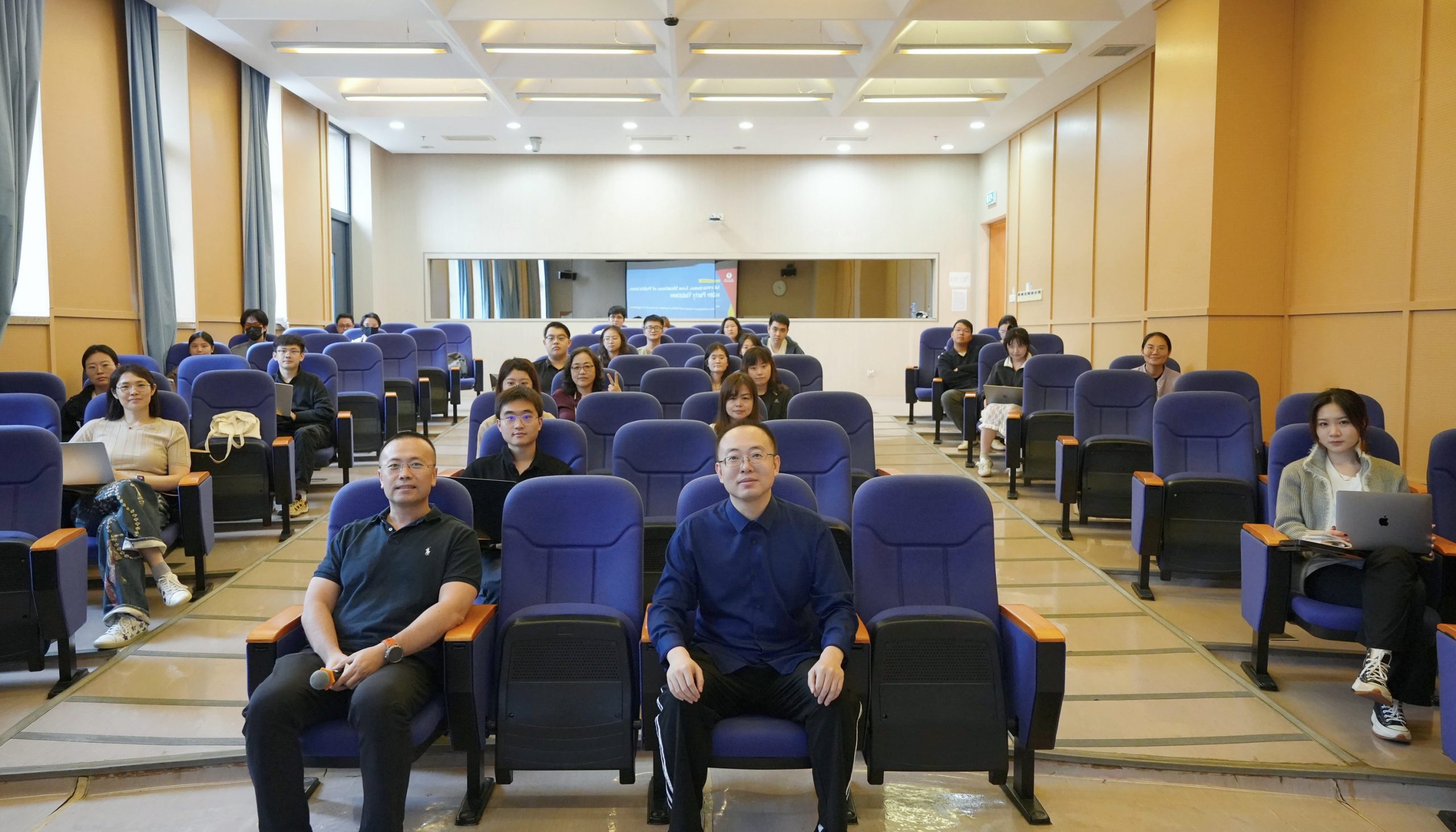
In a recent Computational Social Science Workshop organized by the Faculty of Social Sciences (FSS), University of Macau, Assistant Professor Siyuan Ma from the Department of Communication (DCOM) was invited to share his in-depth research on the “image packaging”—impression management strategies, of American politicians on social media. His work provides important reference and new directions for research in political communication and computational social science.
He noted that as the media environment evolves, the public’s expectations of politicians have grown increasingly high—they are expected to be knowledgeable, maintain a favorable public image, and hold clear partisan stances. To meet these expectations, politicians’ social media strategies have shifted from “performance management” to a “visibility project”, shaping their public image via selective posting and deletion.
Prof. Ma’s team analyzed U.S. congressional social media data from 2019–2020 using descriptive analysis and logistic regression, revealing several patterns. First, politicians delete more posts during sensitive moments such as the Trump impeachment trials and COVID-19 outbreak. Second, due to the higher status of their office, senators deleted posts significantly less often than members of the House of Representatives, instead projecting a “stable image” through policy commentary while avoiding personal attacks, cross-party disputes, and private life. Third, rather than spreading disinformation, politicians frequently post highly subjective, hard-to-verify comments to shape public opinion—a form of sophisticated agenda-setting.
Prof. Ma’s research serves as a reminder for the public to remain vigilant about “expression bias” when browsing social media. It also highlights the current challenges in tracking social media messaging. The workshop offered a unique perspective, not only deepening attendees’ understanding of political communication but also providing valuable insights for future research in related fields.
Siyuan Ma is currently Assistant Professor in the Department of Communication. His research interests include political communication, international communication, computational methods, and big data. His work has been published in numerous internationally renowned academic journals, including Digital Journalism, Human Communication Research, Health Communication, and Communication Monographs.