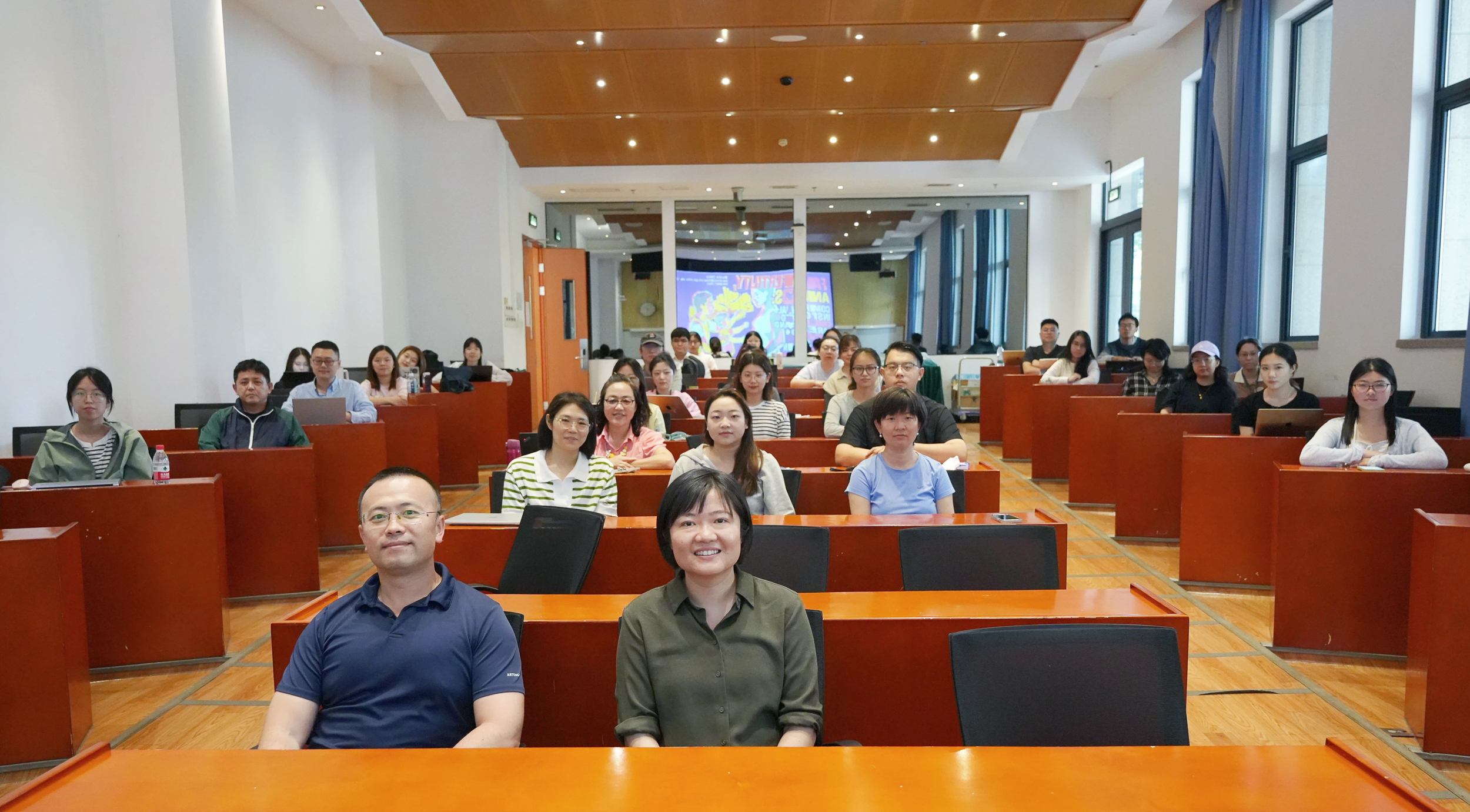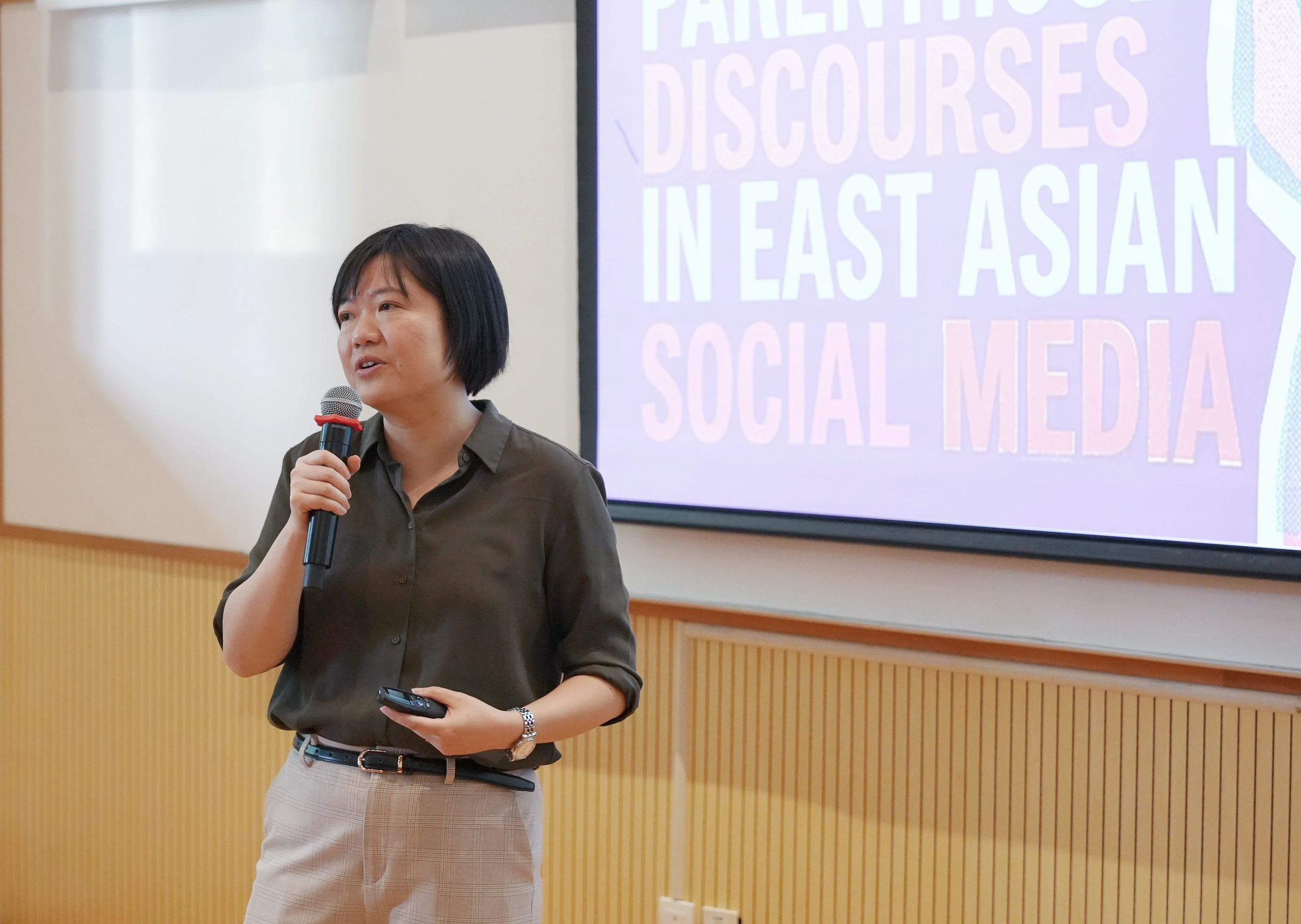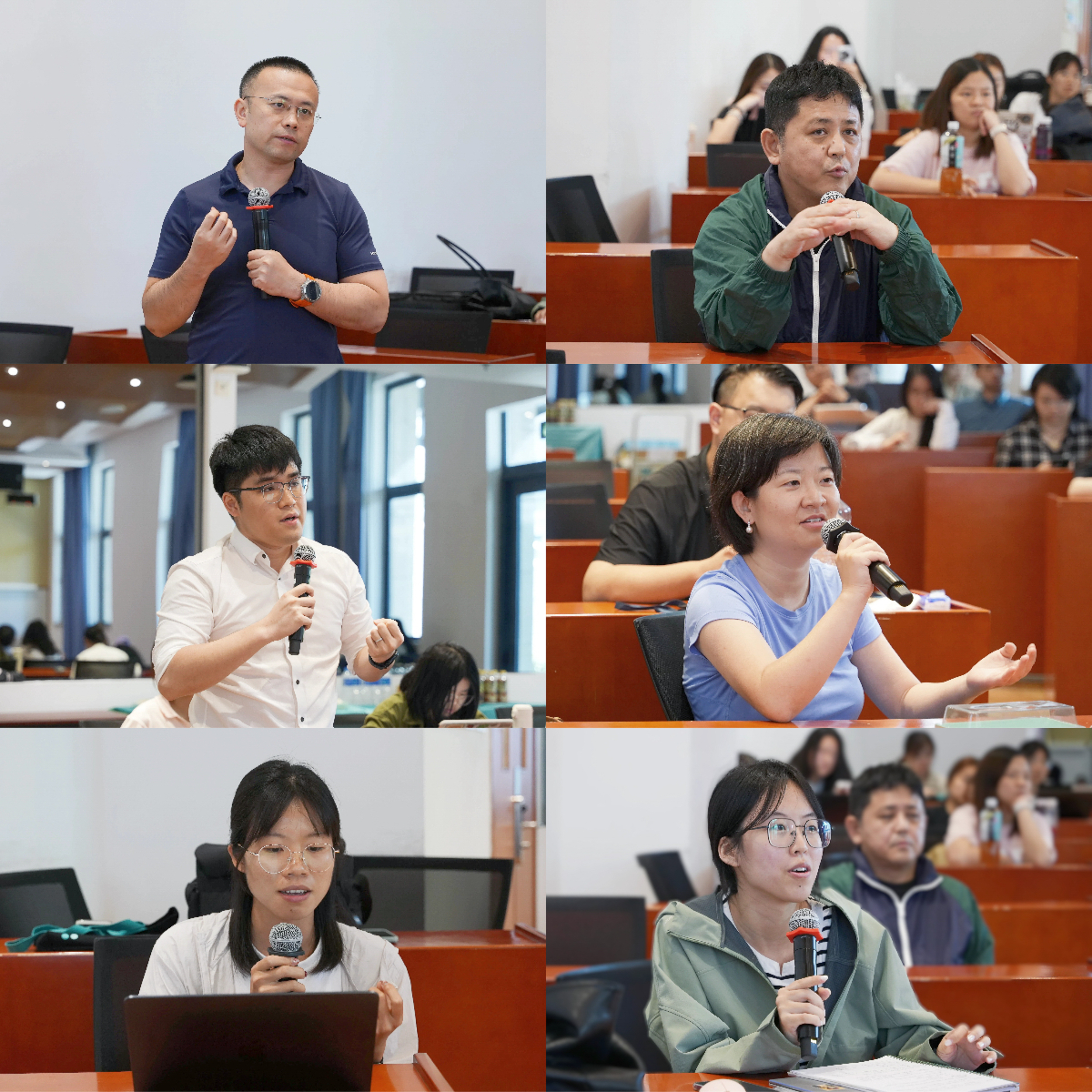
The Faculty of Social Sciences at the University of Macau recently hosted a Computational Social Science Workshop featuring Dr. Muzhi Zhou, Assistant Professor at the Hong Kong University of Science and Technology (Guangzhou). Dr. Zhou presented research analyzing fertility discourse on East Asian social media platforms, offering data-driven insights into the region’s historic low birth rates.
Using big data analytics, Dr. Zhou’s research systematically examines how young people across East Asia discuss childbirth and parenthood online, providing new empirical perspectives on the fertility decline affecting China, Japan, and South Korea.
Dr. Zhou shared findings from two major studies. The first is a cross-national comparison analyzing over 200,000 comments on fertility-related content from Douyin (China) and TikTok (Japan and South Korea). Using AI topic modeling (BERTopic) combined with manual coding, the research reveals stark differences in attitudes. Chinese users concentrated heavily on “childrearing costs” and “personal freedom”, with roughly 50% of comments expressing anti-natalist views and strong skepticism toward pro-fertility policies. While Japanese and Korean users also face economic pressures, they placed greater value on the emotional rewards of parenting, with lower rates of anti-natalist sentiment.
The second study focuses on intensive parenting culture in China, examining popular parenting content creators and their comment sections through large language model analysis. The research found mothers are predominantly portrayed as “self-sacrificing caregivers” while fathers appear as “entertainment-focused companions”. Comment sections showed significant regional variations: users in economically developed areas emphasized gender equality in parenting; those in highly educated regions focused on science-based parenting methods; and users in higher-fertility areas discussed reproductive decision-making itself. The algorithm-driven promotion of middle-class parenting models creates invisible pressure on ordinary families, intensifying fertility anxieties and feelings of inadequacy.
Dr. Zhou noted that Douyin, as China’s most influential information platform, does more than reflect social reality — its algorithms actively reinforce specific parenting standards, raising the bar for what society considers “qualified parents”. She emphasized that East Asia’s anti-natalist discourse differs fundamentally from Western philosophical antinatalism. Young East Asians are not rejecting family values; rather, they are making rational decisions to delay childbearing based on economic costs and social pressures.
The research integrates AI, big data analysis, and social science theory, providing empirical evidence for optimizing population policies in East Asia while offering methodological insights for cross-cultural studies of online discourse.
Dr. Muzhi Zhou is an Assistant Professor in the Urban Governance and Design Thrust at the Hong Kong University of Science and Technology (Guangzhou). She received her Ph.D. in Sociology from the University of Oxford. Her research focuses on family and gender, digital inequality, and social computing, with publications in leading journals including Gender & Society, Journal of Marriage and Family, and Population and Development Review.