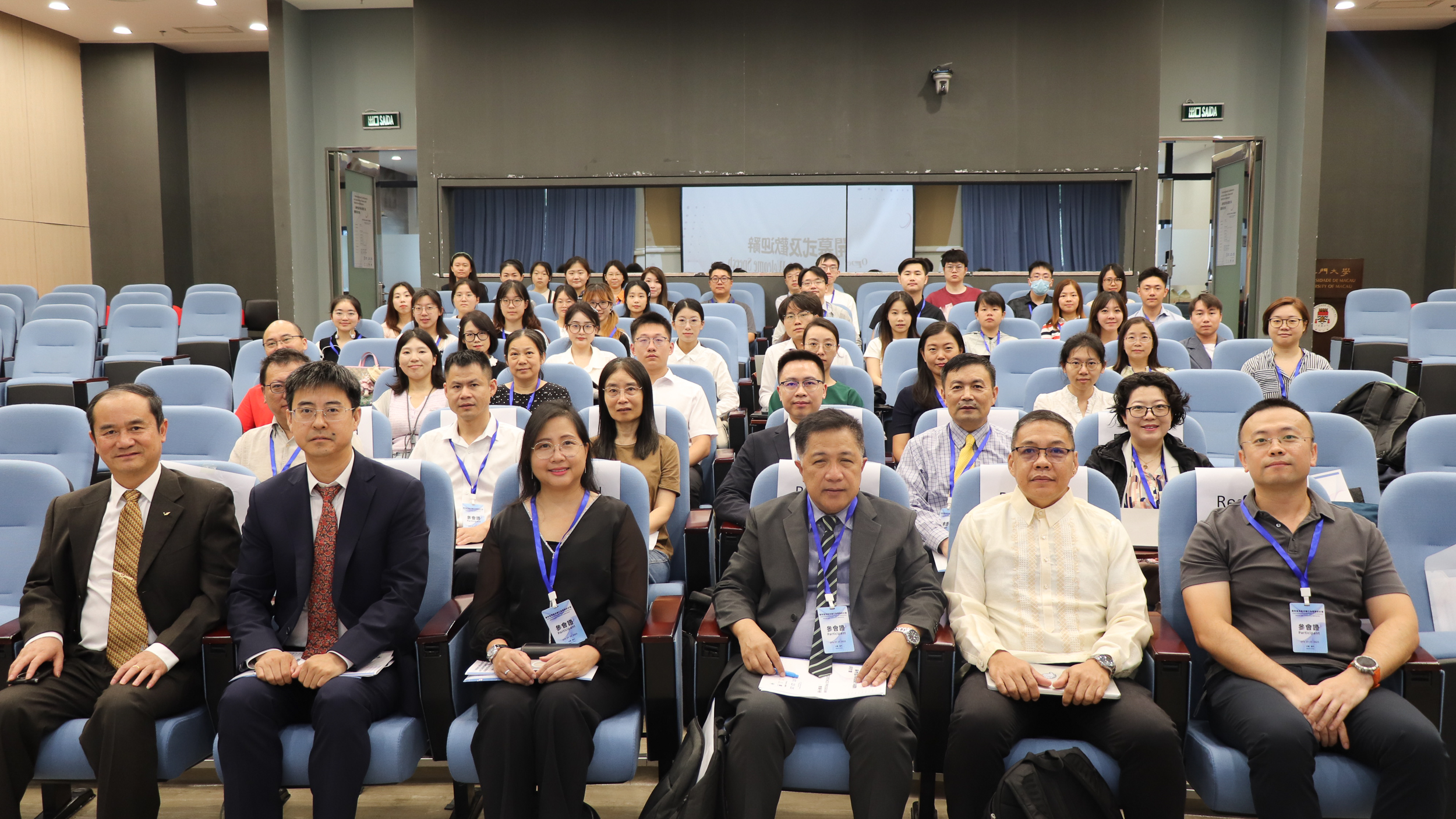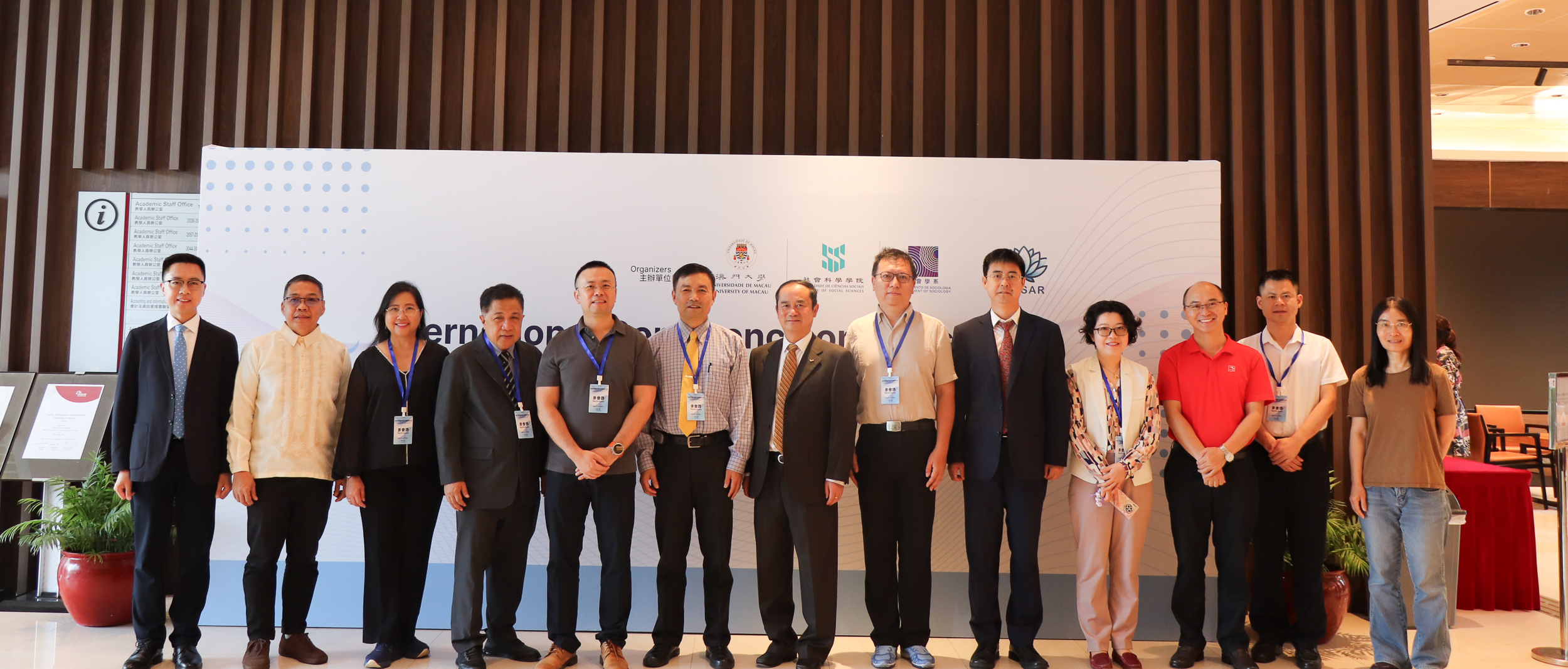
The Department of Sociology of the Faculty of Social Sciences (FSS) of the University of Macau (UM), in collaboration with the Asian Association for Substance Abuse Research and Addiction Prevention (AASAR), co-organized the International Conference on Substance Abuse and Addictive Behavior 2025. The event brought together experts and scholars from mainland China, Hong Kong, Macao, Thailand, the Philippines, etc., to explore interdisciplinary research and practical approaches in addressing drug abuse and addictive behaviors.
The opening ceremony featured a speech by Prof. Tianji Cai, associate dean of FSS, who emphasized the importance of international collaboration and interdisciplinary dialogue in addressing drug abuse issues. The conference invited several experts to deliver keynote speeches, including Yongan Zhang from Shanghai University, Leonardo R. Estacio, Jr. and Dindo Café from the University of the Philippines, Guanrao Mo from Yunnan Normal University, Spencer De Li from UM, Rasmon Kalayasiri from Chulalongkorn University (Thailand), Hua Zhong from The Chinese University of Hong Kong, Liu Liu from Nanjing University, Jiang Hu from Southwest University of Political Science and Law, and Dianxi Wang from Beijing Sport University. They explored topics such as global drug trends, the social structures of addiction, and policy practices.
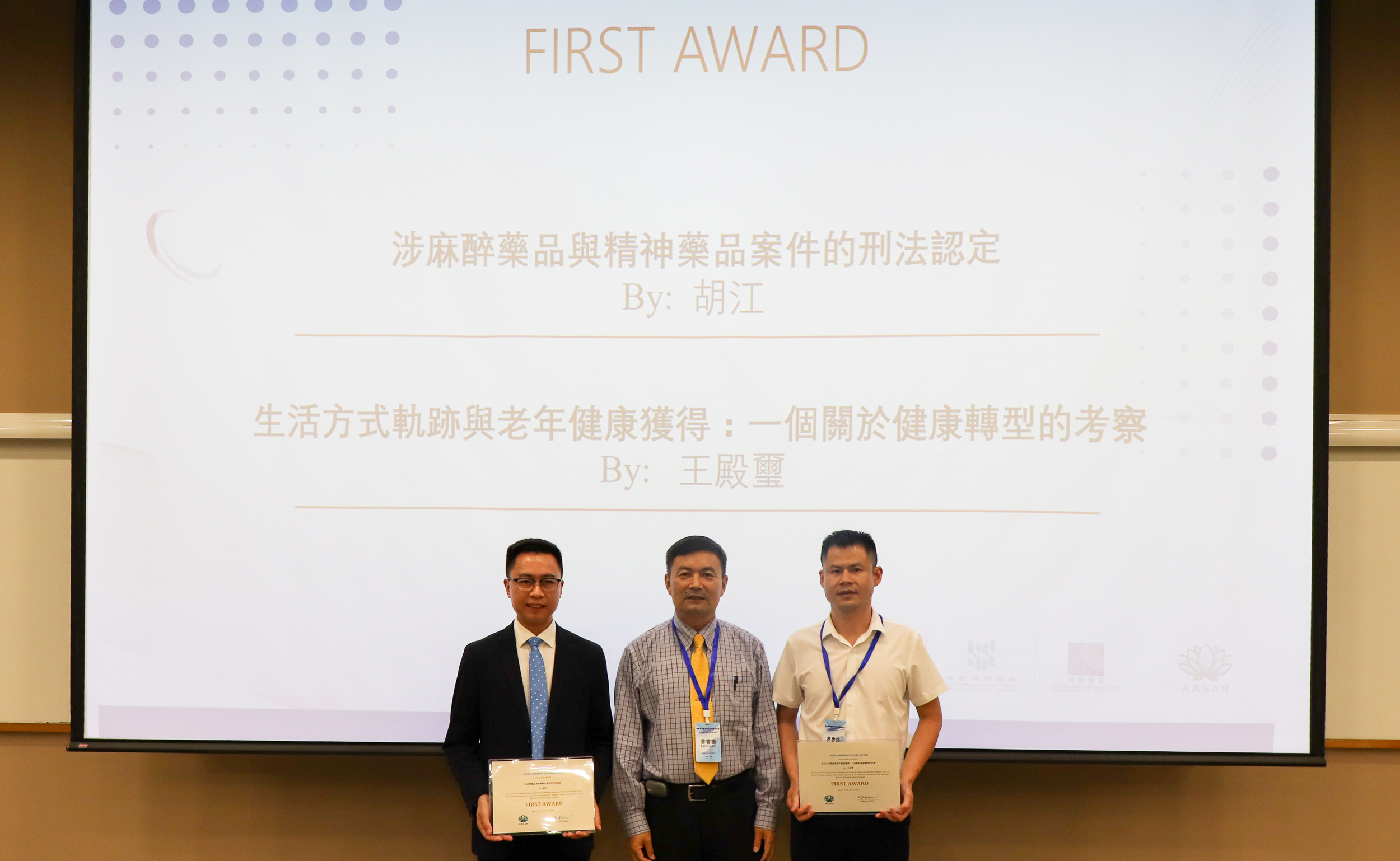
The conference held the Best Paper Awards Ceremony honoring scholars and their innovative contributions in the field of drug abuse and addictive behavior research. Associate professor Jiang Hu from the Southwest University of Political Science and Law received the First Prize for his paper “The Criminal Law Determination of Cases Involving Narcotic Drugs and Psychotropic Substances”, while associate professor Dianxi Wang from the Beijing Sport University was also awarded for his study “The Trajectories of Lifestyle and Elderly Health Acquisition: An Examination of Health Transitions”.
The conference featured three keynote speeches and seven parallel forums, covering fields such as medicine, sociology, psychology, public health, law, education, and social work. Participants engaged in in-depth discussions on drug abuse issues in Asia, with topics including youth e-cigarette use, familial and cultural influences on addiction, stigma and recovery interventions, drug policy reform, community rehabilitation models, cross-border drug control, and regulatory strategies in the digital age. These discussions highlighted the depth of interdisciplinary research and its practical applications.